

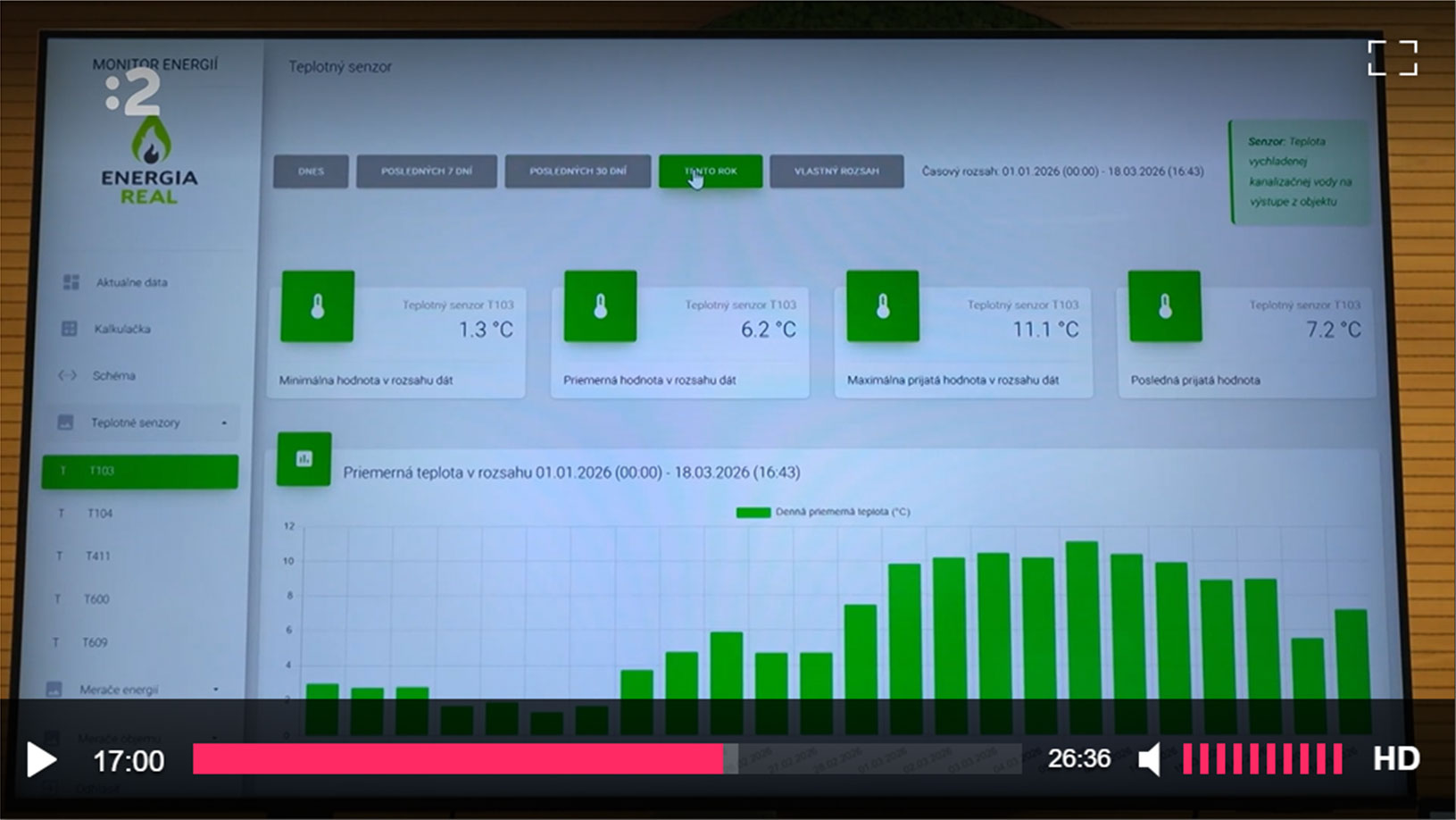
Results from IoT sensors on the heat-recovery unit – Source – STVR. VaT Available at: programme archive
The growth of industry in Central Europe is linked to a high dependence on the use of primary resources, which represents a significant environmental as well as economic challenge. Work on this challenge is being carried out within the Smart Circuit project (Interreg Central Europe), which supports smart, circular, and digital innovation centres with the aim of strengthening the manufacturing ecosystem toward a greener and more competitive future.
At the Technical University of Košice, this project has also been transformed into concrete solutions. One of them is the concept of heat recycling in a residential apartment building combined with data collection and analysis.
A good idea, however, is only the beginning. In practice, what matters is whether it can be implemented, tested, and then scaled. It is precisely here that a gap often arises between the business environment and research. Yet the connection between these two worlds can be crucial, and Smart Circuit is a concrete example of that.
Innovation begins with a change in thinking
Some of the most interesting solutions do not arise from new technologies, but from a new perspective on existing problems. As mentioned in the Veda a technika (Science and Technology) programme, the basis of one innovation was precisely a change in perspective, where instead of linear thinking, energy began to be perceived as something that constantly circulates in the system, yet is unnecessarily lost. Such a shift in thinking, however, is only the first step. It is followed by a much more demanding phase – validation, development, and implementation.
1 STVR. Veda a technika [online]. 28. 3. 2026. Dostupné na: archív relácie [cit. 2026-04-07]. Časť: 10:45–19:30.
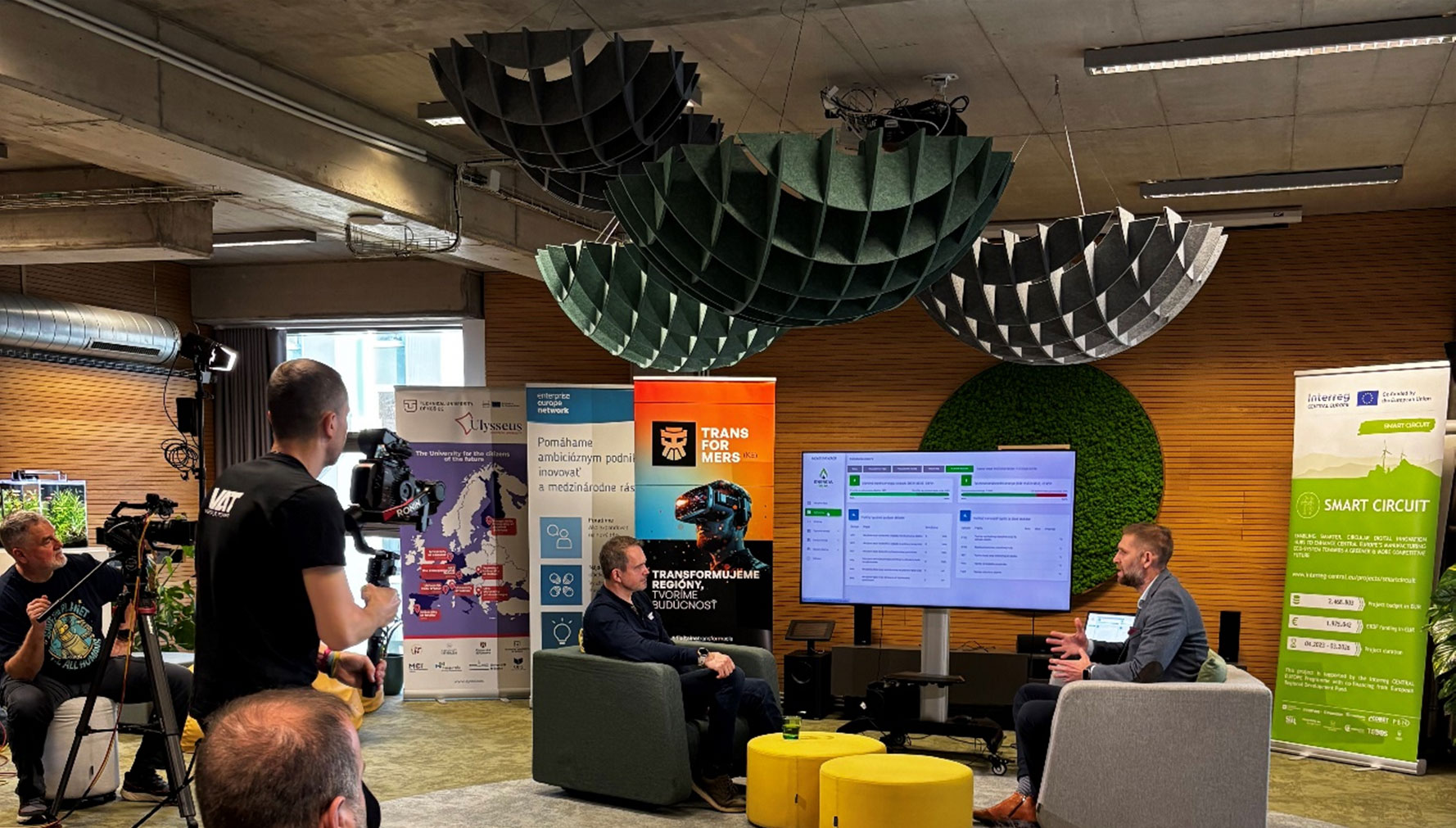
Interview about linking the university with practice in the VaT programme – Source – own archive
More than just research
Today, the university is no longer only a place of academic inquiry. It increasingly helps companies verify whether their idea is truly innovative, assess its technical feasibility, analyse its economic sustainability, and test solutions even before major investments are made.
Podnikateľ tak nemusí riskovať celý výrobný proces, ale môže si najskôr overiť jeho časť v kontrolovanom prostredí. Zásadnou výhodou je znižovanie rizika, možnosť experimentovať a odhaľovať problémy už v ranom štádiu. Zároveň ide o prostredie, kde sa prirodzene prepájajú rôzne odbory – od techniky cez ekonomiku až po riadenie procesov.
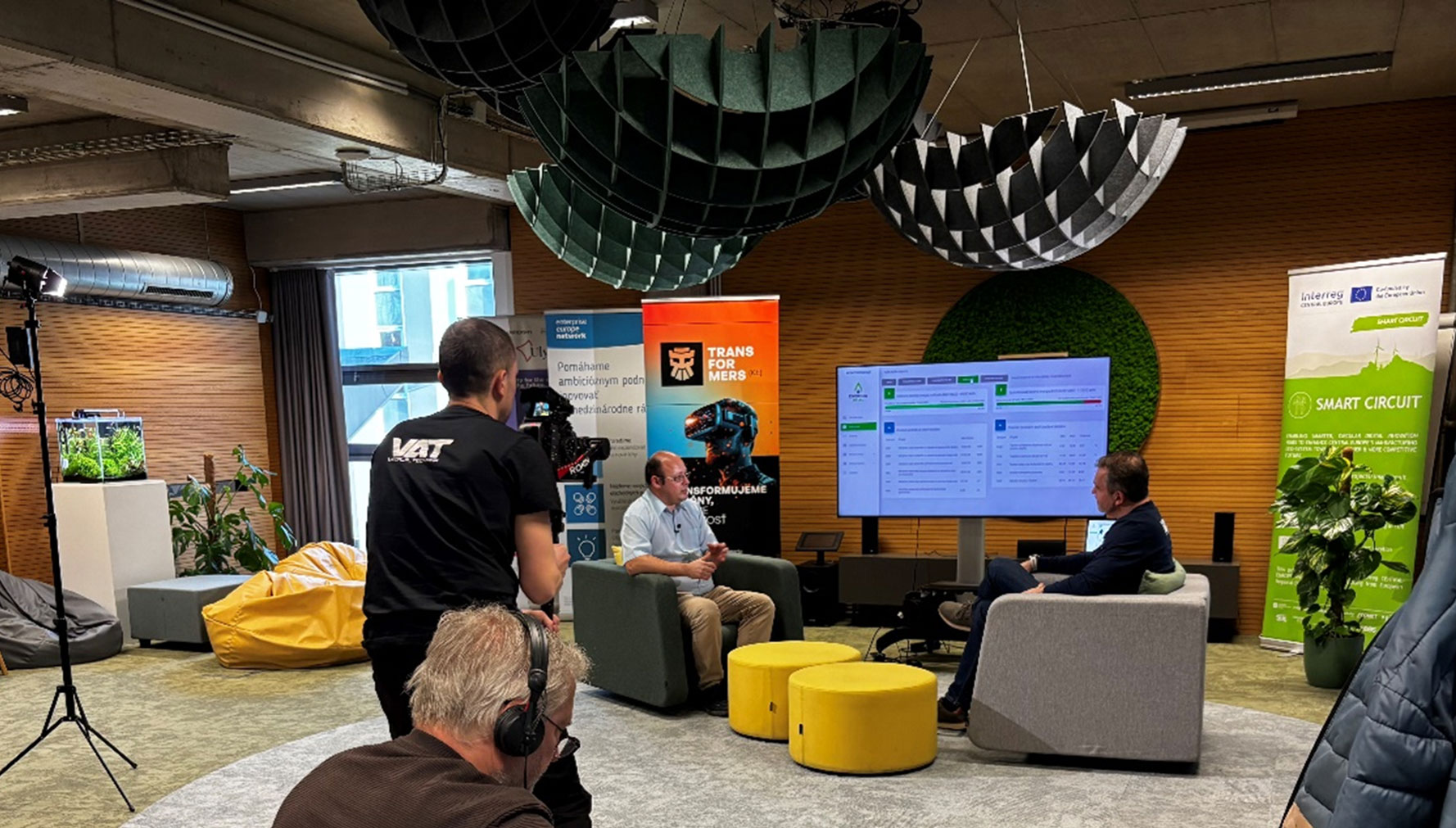
Vysvetlenie zapojenia IoT snímačov do rekuperačného systému v relácii VaT – Zdroj – vlastný archív
Viac než technológia
Inovácie nie sú len o zariadeniach. Často zlyhávajú práve na implementácii. Aj preto sa do projektov zapájajú tímy, ktoré rozumejú fungovaniu firiem – ekonomike, legislatíve či riadeniu zmien. Bez tohto prepojenia by mnohé technologické riešenia nikdy neopustili laboratórium.
Kedy osloviť univerzitu?
Jednou z častých chýb je, že firmy prichádzajú príliš neskoro – až keď narazia na problém. V skutočnosti má spolupráca zmysel v každej fáze: od overovania samotnej myšlienky, cez vývoj technológie, až po jej zavádzanie do praxe.
Univerzity disponujú kapacitami, ktoré dokážu odhaliť slepé miesta ešte predtým, než sa zmenia na nákladné chyby.
Spolupráca ako nevyhnutnosť, nie bonus
Projekt Smart Circuit ukazuje širší trend: prechod na obehové hospodárstvo si vyžaduje koordináciu medzi viacerými aktérmi – firmami, výskumom aj verejnými politikami.
Inovácia dnes nevzniká izolovane. Vzniká v sieti. A práve univerzity sa čoraz viac stávajú miestom, kde sa tieto siete prepájajú.