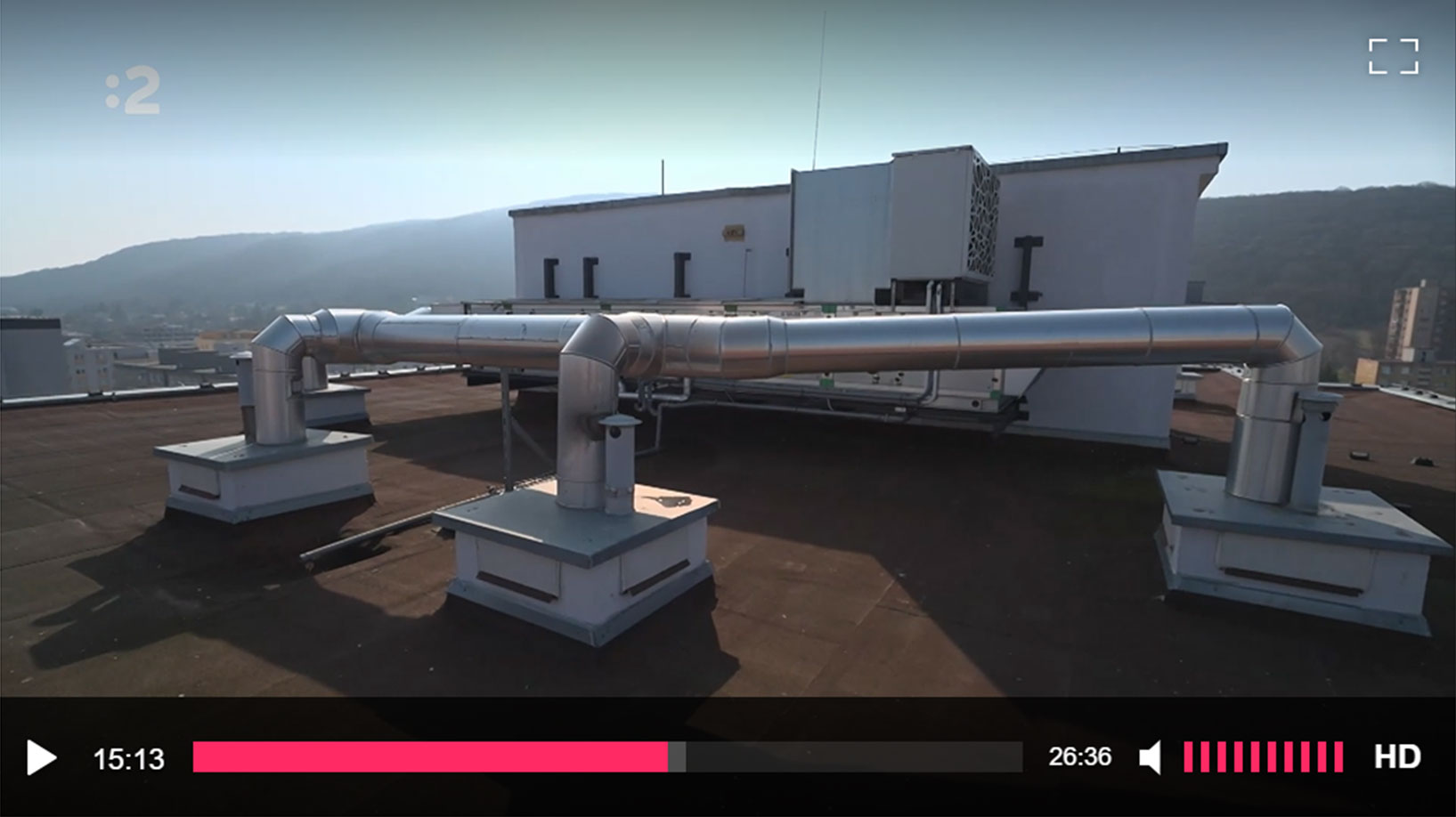
Example of the ventilation unit at the addressed site in the VaT programme – Source – STVR. VaT Available at:programme archive
Gas, electricity, or fuels are typical energy sources that we usually encounter when thinking about heating. But how necessary is it really to rely on external energy sources? A pilot project implemented within Smart Circuit showed that we have a huge amount of energy available even without them – we simply let it escape unused.
The innovative solution is based on a simple but fundamental principle that was created through cooperation between the private sector (Energia Real s. r. o.) and the Technical University of Košice. The project shows that introducing the circular economy into everyday life does not have to mean limitations. On the contrary, it can bring greater independence, savings, and comfort.
1 STVR. Veda a technika [online]. 28. 3. 2026. Dostupné na: archív relácie [cit. 2026-04-07]. Časť: 10:45–19:30.
The energy we had been ignoring
In an apartment building in Devínska Nová Ves in Bratislava, a solution was successfully tested that can fundamentally change the way we think about energy in buildings.
It is a pilot implementation carried out within the Smart Circuit project, focused on supporting digital and circular solutions in Central Europe.
Every building is an energy system. The problem, however, is that a substantial part of its energy is constantly escaping, mainly through ventilation and wastewater (sewer) water. It is energy that we have already paid for, but then release into the environment without using it.
The new system turns this loss into an opportunity. By using exchangers, it can capture heat from exhausted air and wastewater and reuse it – for example, for heating hot water or space heating.
Interestingly, this is not a futuristic technology. The basic principle has been known for decades – it is efficient energy transfer using a compressor. What is new is the way these processes are interconnected and controlled in real time using data and algorithms.
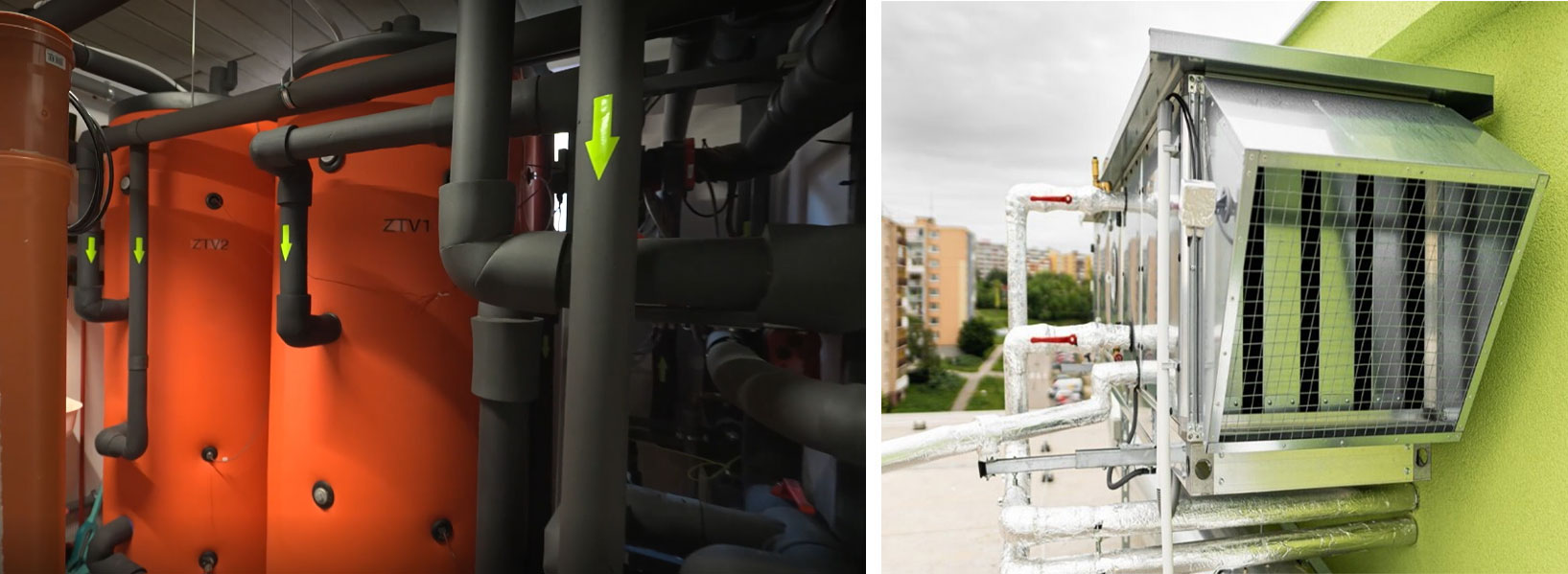
Examples of heat-recovery system units – Source – own archive
Digitalisation as the key
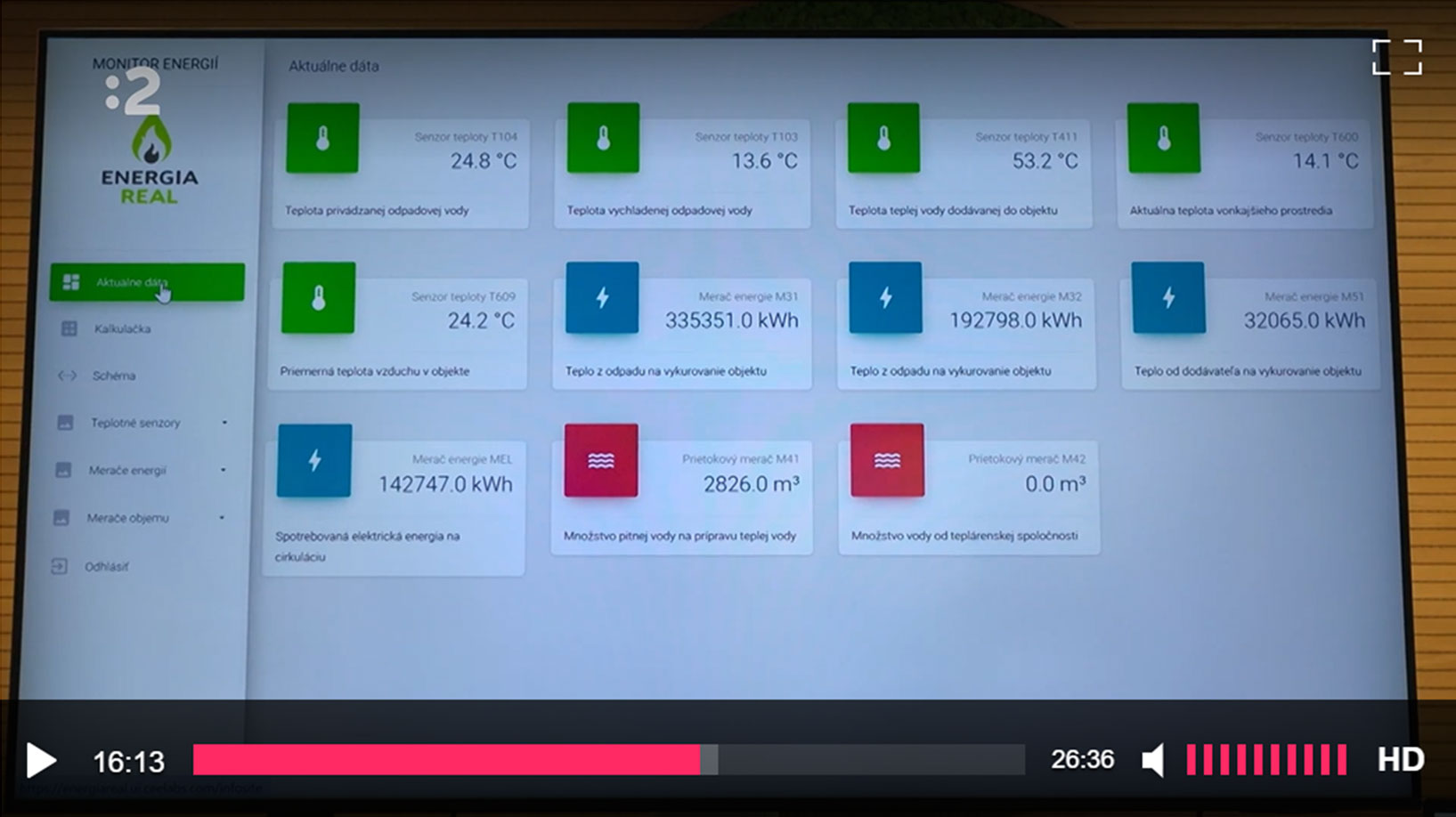
An important part of the solution is data collection. The heat-recovery unit is supplemented with IoT sensors that monitor temperatures, flows, and energy consumption in real time. This makes it possible to analyse the behaviour of the building precisely, identify losses, optimise the use of energy, and provide residents with recommendations for savings.
Example of results from IoT sensors on the heat-recovery unit – Source – STVR. VaT Available at:programme archive
Suddenly, this is no longer only about technology, but about informed decision-making. Residents can see how energy in their building works and can actively manage it.
More energy than we need
Perhaps the most surprising part is the result itself: the building can produce more usable heat than it consumes. That means one apartment building could supply not only itself, but potentially neighbouring buildings as well.
In practice, this shows that the energy problem may lie not only in the lack of sources, but also in their inefficient use. The good news is that we do not necessarily have to look for new energy sources to heat residential buildings. It is often enough to make better use of the ones we already have.