

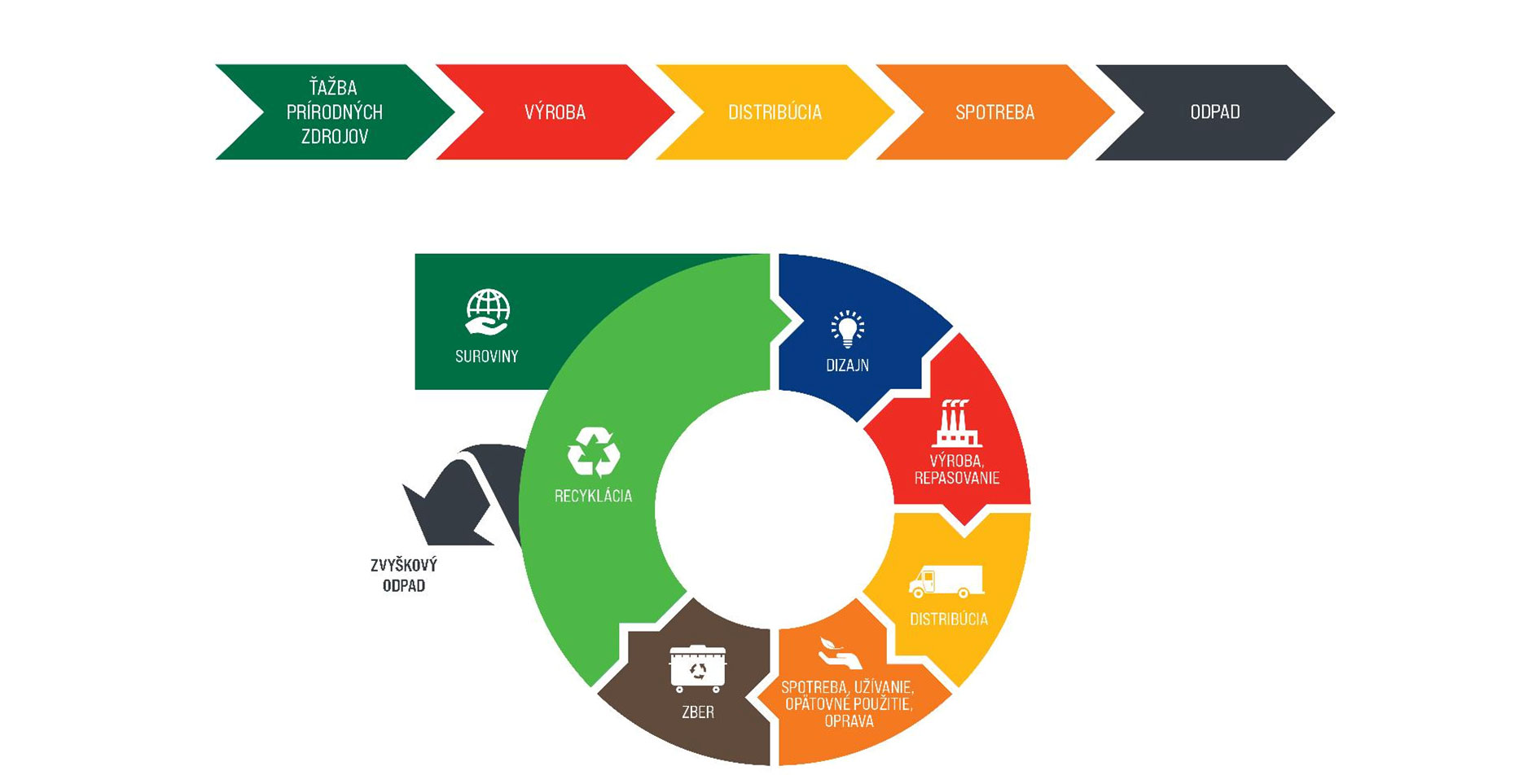
Linear vs. circular economy – Source – Institute of Circular Economy. Available on the website
The transition to the circular economy is often associated with new technologies, innovation, or legislation. Less is said, however, about what is crucial for this change – the knowledge and abilities of the people who are supposed to make it happen.
That is why the international Smart Circuit project includes not only the development of technological solutions, but also systematic education. One of its main outputs is the Circular Innovation Academy (CIA) – an educational programme focused on connecting digital technologies and the circular economy.
Why education is key
Many companies today recognise the need to move from the linear model of “make – use – throw away” to the circular economy. The problem, however, is often not a lack of motivation, but a lack of know-how.
- How can circular principles be introduced into production?
- How can digital technologies be used for more efficient resource management?
- And how can these changes be implemented in practice without unnecessary risks?
The Circular Innovation Academy responds precisely to these questions.
What the Circular Innovation Academy offers
The CIA is designed as a comprehensive educational programme that provides participants not only with theoretical knowledge, but also with practical tools for applying it.
Teaching takes place online (through the Moodle platform) and is divided into several thematic modules. In total, it contains:
- 8 modules
- 35 learning units
- approximately 50 hours of study.
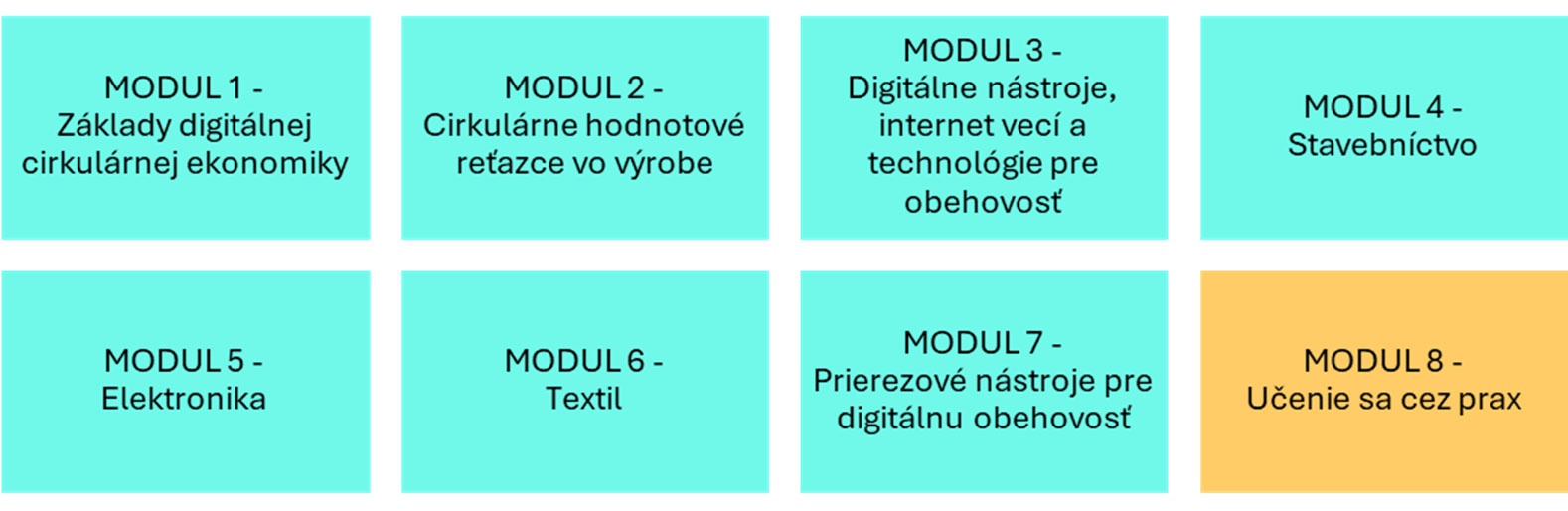
Thematic areas of the CIA modules on the Moodle platform
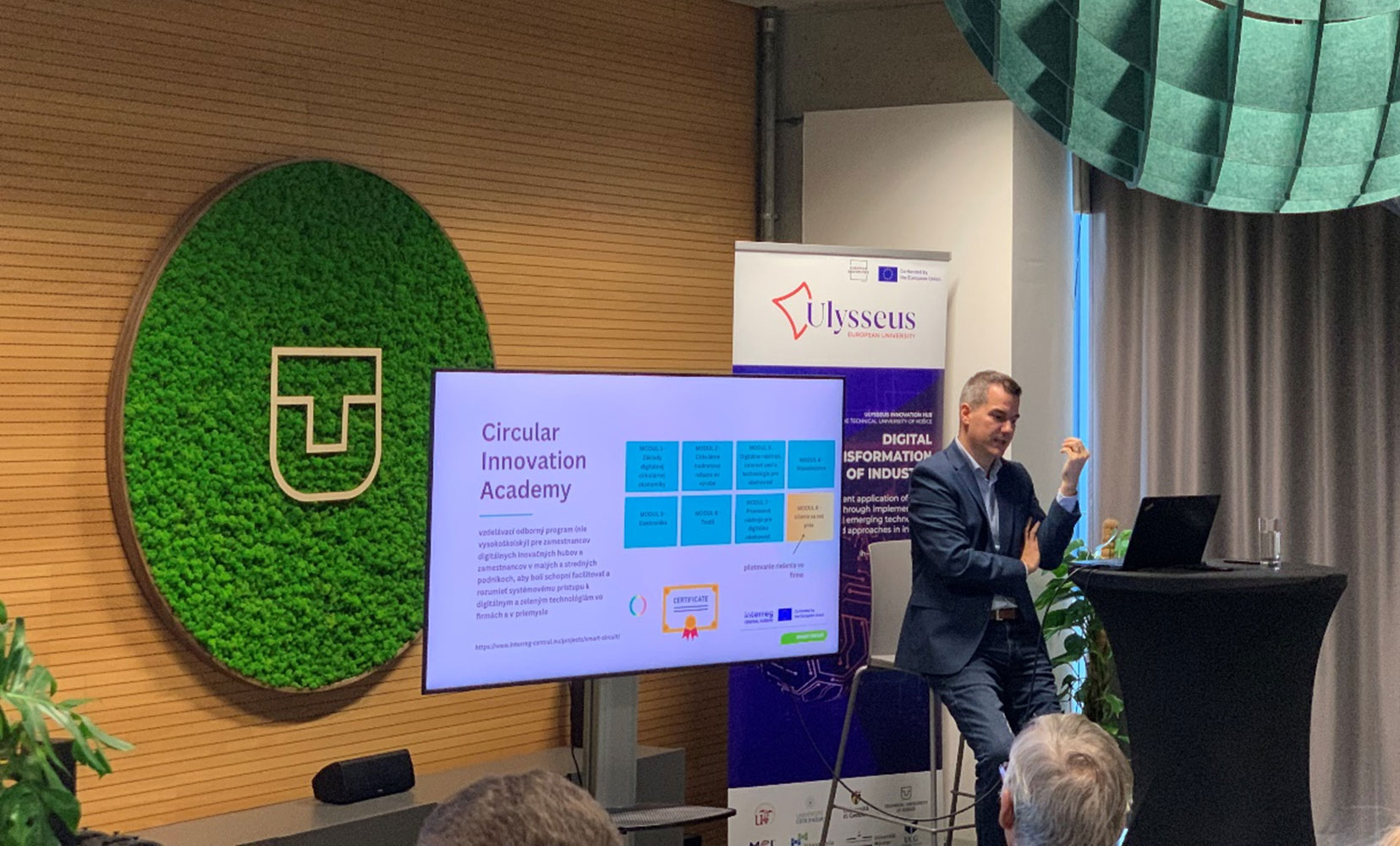
Presentation of the CIA at Innovation Breakfasts – Source – own archive
After completing it, participants can obtain a certificate confirming their readiness to navigate the field of digitally supported circular economy.
From fundamentals to specific sectors
The programme covers a wide range of topics – from the fundamentals of the circular economy to its specific applications in different sectors.
Participants deal, for example, with:
- the principles of digitally managed circular economy,
- the functioning of circular value chains in manufacturing,
- the use of technologies such as IoT, artificial intelligence, and data analytics,
- and also specific areas such as construction, electronics, or the textile industry.
An important part is also so-called “learning by doing”, meaning an emphasis on practical applications and real examples.
Who the academy is intended for
The Circular Innovation Academy is not intended only for academia. On the contrary, it targets mainly:
- companies and their managers,
- sustainability experts,
- innovators and technology enthusiasts,
- but also the public sector.
Its goal is to prepare people for the real challenges brought by economic transformation.
Why it matters
Technologies alone will not bring change. Without people who understand them and know how to apply them properly, they remain unused.
The Smart Circuit project thus shows that the transition to a more sustainable economy is not only about innovation, but also about education.
If we want to use resources more efficiently, reduce waste, and build a competitive economy, we need people who understand the new principles and can transfer them into practice.
An investment in the future
Education in the field of the circular economy and digitalisation is therefore no longer just an “add-on”. It is becoming a basic requirement for the future.
The Circular Innovation Academy is one of the concrete steps for starting to build that future today.